
North I-680 Office Vacancy Falls 210 Basis Points in Sharpest Quarterly Drop Since 2015, Valley Relocation & Storage Analysis Finds
Colliers reports North I-680 vacancy fell to 22.3% in Q3 2026 as the corridor recorded 332,050 square feet of positive
Press Release Disclaimer: This is a press release distributed through the XPR Media network. It has not been independently verified by our newsroom.
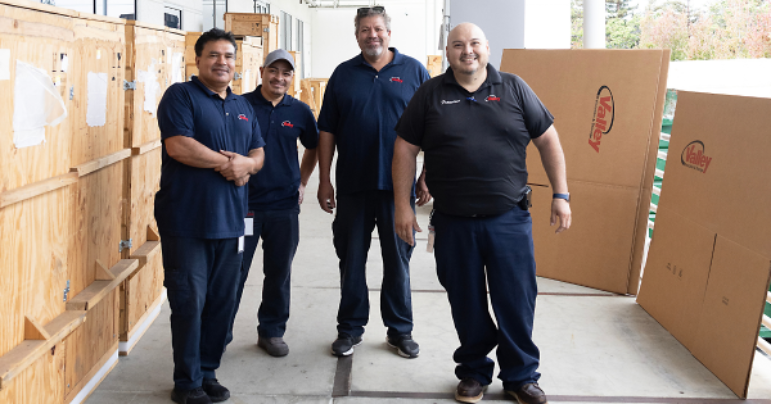

Colliers reports North I-680 vacancy fell to 22.3% in Q3 2026 as the corridor recorded 332,050 square feet of positive net absorption, while San Francisco posted its fifth consecutive quarter of occupancy gains, giving Bay Area employers a changing backdrop for office and facility relocation planning.
CONCORD, CA / ACCESS Newswire / November 4, 2026 / Valley Relocation & Storage has analyzed the latest Bay Area office-market data, focusing on changing commercial occupancy and leasing activity that creates a shifting backdrop for businesses planning office relocations and facility transitions.
The October 6 Walnut Creek Office Market Report by Colliers states that the North I-680 Corridor posted its sharpest single-quarter vacancy improvement since 2015, with overall vacancy declining 210 basis points to 22.3% in Q3 2026. Net absorption reached 332,050 square feet, showing that occupied space increased materially in the quarter. The momentum extends beyond the North I-680 corridor, with San Francisco recording its fifth consecutive quarter of positive office absorption and vacancy falling to the lowest level since Q3 2023.
Valley Relocation & Storage, headquartered in Concord since 1985, positions these real-estate changes as a backdrop for commercial office moves, facility transitions, expansions, consolidations, and restacks. While falling vacancy and rising leasing activity do not directly measure moving volume, they signal that more Bay Area businesses are making space decisions and planning relocations. For companies evaluating office moves, the tightening market carries practical implications for timing, logistics, IT coordination, and downtime management.
North I-680 Vacancy Falls as Occupancy Recovers
The North I-680 Corridor’s Q3 2026 vacancy rate of 22.3% represents a significant quarterly improvement. Vacancy declined 160 basis points, from 23.8% in Q3 2025. The 210-basis-point quarterly drop stands out as the corridor’s largest single-quarter improvement since 2015, signaling a material shift in occupancy patterns.
What drove this quarterly improvement? One major owner-user transaction occupied 125,470 square feet of previously vacant space at 1340 Treat Boulevard. This single lease event illustrates how large occupancy decisions can reshape local market metrics and require complex transition planning. For Valley Relocation & Storage, such owner-user moves often involve multiple phases: site surveys, IT infrastructure relocation, employee communication, and phased occupancy coordination to minimize business disruption.
Concurrent with improving occupancy, average asking rents in the corridor moved in a different direction. As outlined in the October 6 Walnut Creek Office Market Report by Colliers, Class A asking rent declined to $3.23 per square foot from $3.32 in Q2, while overall North I-680 asking rent fell to $3.03 from $3.12. This disconnect between falling vacancy, paired with declining rents, underscores that no single metric captures the full commercial-space picture. Businesses relocating to the North I-680 Corridor face tightening availability but competitive pricing, a combination that can accelerate move planning and shorten decision timelines.
San Francisco Occupancy Gains Reach Five Consecutive Quarters
Beyond the North I-680 Corridor, the broader Bay Area shows consistent occupancy recovery. According to the San Francisco Office Market Report, published on October 5th, 2026, by Colliers, San Francisco recorded 537,334 square feet of positive net absorption in Q3 2026, its fifth consecutive quarter of gains. Year-to-date absorption reached 2.6 million square feet, the highest annual total since 2018. This sustained recovery signals that San Francisco office space is being reoccupied after years of elevated vacancy.
Vacancy metrics reflect this occupancy return. San Francisco vacancy fell to 27.4% in Q3 2026, down 60 basis points quarter-over-quarter and 370 basis points year-over-year, marking the lowest vacancy since Q3 2023. For context, San Francisco’s office market differs materially from North I-680. Vacancy levels remain significantly higher, rents carry different tier structures, and the tenant mix includes technology, financial services, professional services, and media. Yet the shared pattern of positive absorption across geographies indicates Bay Area occupiers are actively committing to office space.
Leasing volume supports this picture of occupier decision-making. San Francisco saw 2.9 million square feet of gross leasing activity in Q3 and 12.5 million square feet year-to-date. While gross leasing includes both new leases and renewals, it does not measure actual physical moves. This volume reflects the number of occupancy decisions tenants are actively making. Each lease transaction or space expansion can trigger facility planning, office furniture logistics, IT deployment, and in some cases, employee relocation support.
Regional Context and Broader Market Trends
The Bay Area office market more broadly showed consistent tightening through mid-2026. In the San Francisco Office Market Report, July 29, 2026, Colliers measured regional office vacancy at 20.0%, down 60 basis points quarter-over-quarter and 150 basis points year-over-year, while Q2 gross leasing totaled 7.7 million square feet and year-to-date leasing reached 17.9 million square feet. These Q2 figures provide a baseline showing that occupancy gains and leasing activity were already underway before Q3’s more dramatic North I-680 improvement.
The tightening market does not mean every geographic submarket or property type experiences identical conditions. Class A properties, newer buildings with modern amenities, and properties in prime locations tend to see faster occupancy recovery than older stock or secondary locations. Landlord incentives, lease terms, and building-specific investment also vary. For Valley Relocation & Storage clients evaluating multiple office locations or considering a move within the Bay Area, this variation means detailed site selection and comparative due diligence remain important despite overall market tightening.
Commercial Relocation Planning in a Changing Market
Valley Relocation & Storage emphasizes that changing occupancy patterns create a planning environment where more companies are making space decisions. Lease expirations, headcount changes, business consolidations, expansions, or owner-user transitions all trigger office-relocation needs.
The company’s commercial moving services address this demand through professional site surveys, move sequencing, flexible after-hours and weekend scheduling to minimize business downtime, IT coordination for server rooms and data centers, lab and biotech equipment relocation with climate-controlled handling, specialty rigging for large equipment, and phased occupancy support for complex transitions.
Valley Relocation & Storage also offers warehouse and temporary storage solutions that bridge timing gaps when lease start dates, buildout completion, furniture delivery, or phased occupancy do not align. For businesses consolidating multiple locations or managing a stepped expansion, short-term storage can reduce pressure on move timing and allow more careful transition planning without warehouse access conflicts.
Methodology
Synthesized findings from Colliers Q3 2026 North I-680 Walnut Creek and San Francisco office-market reports, with Q2 2026 San Francisco Bay Area report as broader regional context. The primary finding is the North I-680 office vacancy decline of 210 basis points to 22.3%, identified by Colliers as the corridor’s largest single-quarter improvement since 2015. Supporting metrics include North I-680 net absorption, San Francisco net absorption and vacancy, and gross leasing activity across geographies.
Valley Relocation & Storage’s public pages provide service scope and practical relocation context. Office vacancy, absorption, and leasing figures describe occupancy and real-estate decision-making, not direct measures of commercial-moving volume. No proprietary Valley Relocation & Storage move-volume, customer data, project outcomes, or cost-savings analysis was supplied.
Frequently Asked Questions
What does falling office vacancy mean for Bay Area businesses planning a move?
Lower vacancy signals that more space is occupied, and property availability is tightening. However, individual tenant decisions still depend on lease terms, location, building quality, business needs, and headcount plans. A tightening market creates urgency for some businesses and may shorten decision timelines, but it does not mean every company should move quickly or that all locations are equally constrained.
How far in advance should a commercial office move be planned?
It’s advisable to plan several weeks ahead for most office moves, though lead time varies with office size, building access, IT scope, permitting, specialty equipment, and whether occupancy is phased. Larger moves, server-room relocations, lab or biotech equipment moves, and transitions requiring weekend or after-hours scheduling benefit from longer planning windows to coordinate logistics and minimize business disruption.
How can companies reduce downtime during an office relocation?
Companies can reduce downtime through site surveys, mapping workstations and equipment, detailed move sequences coordinating timing, after-hours and weekend scheduling, IT coordination with technical teams, floor plans and labeling systems, and phased employee transitions rather than all-at-once cutover.
What makes hospital, lab, or data-center moves different from standard office moves?
Medical and lab moves involve climate-sensitive equipment requiring controlled-environment handling, coordination with on-site technical and medical staff, compliance with facility protocols, specialty rigging for large medical equipment, and often emergency backup systems that must remain operational during transition. Data-center and server-room moves demand similar technical coordination, power-management planning, and network continuity to prevent downtime.
When does temporary commercial storage make sense during a relocation?
Storage becomes valuable when lease dates, buildout timelines, furniture delivery schedules, or phased occupancy do not align. Storage can bridge gaps between facility transitions, allow decommissioning of old space without pressuring new-space occupancy, and provide a buffer for equipment staging or bulk inventory logistics during multi-phase moves.
About Valley Relocation & Storage
Valley Relocation & Storage has served Northern California since 1985, providing commercial moving, office relocation, MAC services, IT and data center relocation, hospital and lab moving, specialty rigging, warehousing, and flexible after-hours scheduling. Operating storage locations in Concord, Milpitas, Benicia, and West Sacramento, the company is a licensed and insured agent of North American Van Lines and CRST, serving Bay Area businesses, healthcare facilities, laboratories, and technology companies with complex facility transitions.
Source: Valley Relocation & Storage
Contact: Scott Seppala, Principal
Email: sseppala@valleyrelocation.com
Location: Concord, CA
SOURCE: Valley Relocation & Storage
View the original press release on ACCESS Newswire
